The Evolution of Opera
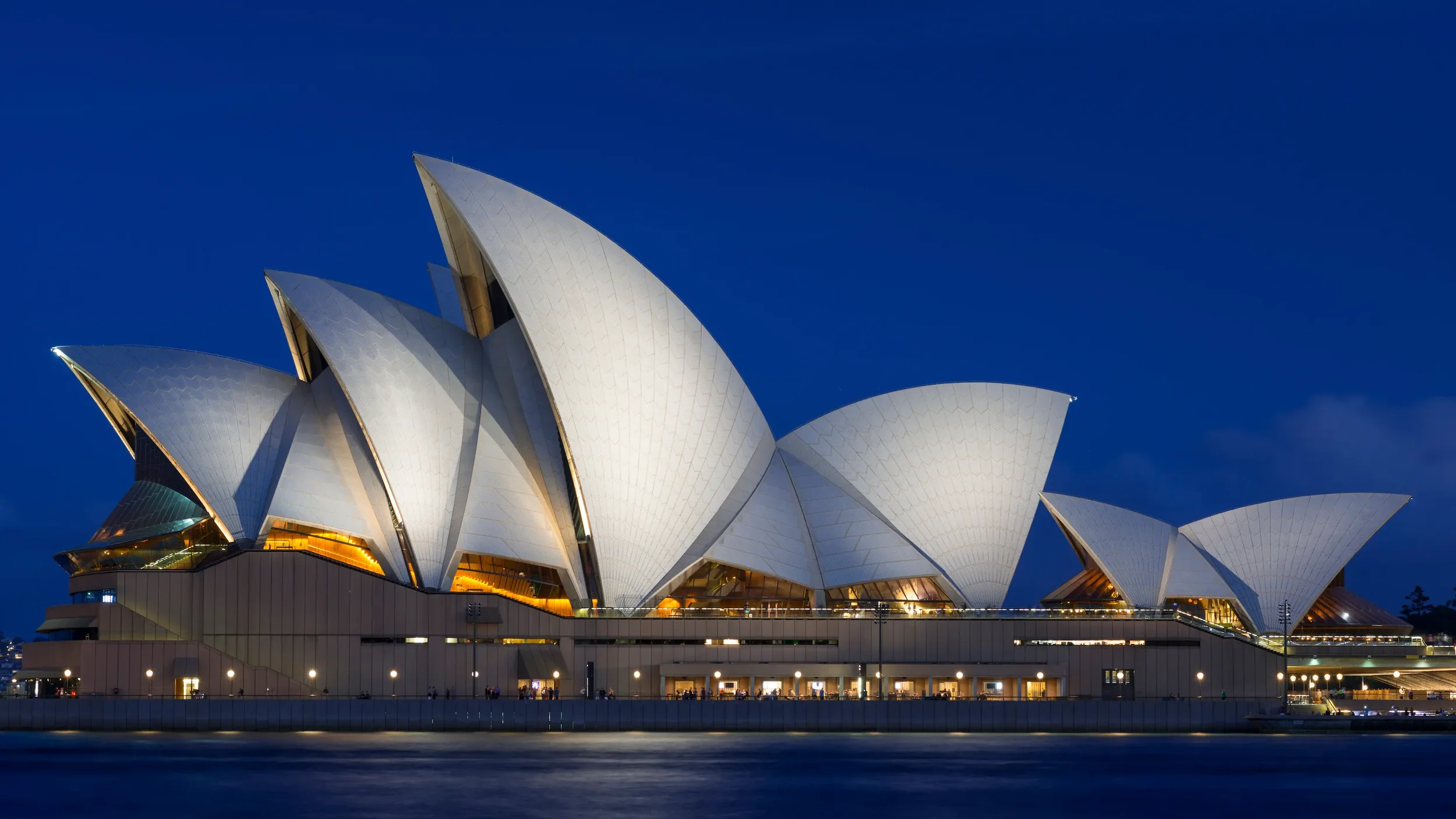
The Sydney Opera House
First published September 15, 2026
In c.1597, Jacopo Peri (1561–1633) composed Dafne, considered the first opera written. It has not survived intact. A colleague, Giulio Caccini, provided some of the music. Peri’s Euridice, released in 1600, is the earliest surviving complete opera. It was produced as a wedding gift to King Henry IV of France and Maria de’ Medici. It is based on Ovid’s tale of the musician, Orpheus, and his wife, Euridice. It can be heard on YouTube with period instruments providing the music.
Fostered by the Medici court, opera was propelled by a desire to recapitulate Greek theater, a combination of music, drama, and spectacle. Soon, opera went from being the entertainment of royalty and aristocrats to the engagement of wider audiences. Claudio Monteverdi (1567–1643) introduced L'Orfeo in 1607. It contained more orchestral variety and emotion. Early opera was performed in Venice, where, in 1637, the first public opera house was opened, Teatro San Cassiano. This permitted the movement of opera from the royal court to public venues. The broadened venues prompted Monteverdi to revise several operas he had written previously and write new ones, including L’incoronazione di Poppea. By the time of his death, at age seventy-six, opera had achieved broader public interest.
Several memorable composers followed, including Alessandro Scarlatti (1660–1725) and George Frideric Handel (1685–1759). This broadened selection of works enhanced opera’s acceptance by the public. In time, two types of opera emerged: opera seria (tragic) and opera buffa (comical). In Vienna, as in Venice, opera became a spectacle, with elaborate sets, costumes, and staging techniques. The masterpieces of Wolfgang Amadeus Mozart (1756–1791), The Marriage of Figaro (1786) and Don Giovanni (1787), raised the quality of opera in a dramatic way, capturing more public interest.
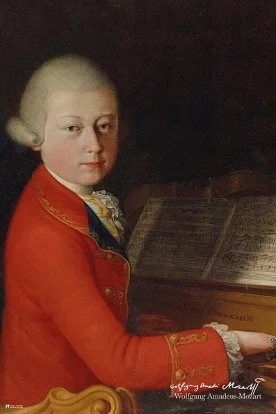
Wolfgang Amadeus Mozart composing
Other composers, including Gioachino Rossini (1792–1868), Gaetano Donizetti (1797–1848), and Vincenzo Bellini (1801–1835), introduced the bel canto (beautiful singing) style, emphasizing vocal technique, agility, tonality, and long legato phrasing. They were followed by Giuseppe Verdi’s Rigoletto (1851), then by La traviata and Il trovatore (both in 1853). Richard Wagner (1813-1883) introduced his dramatically different style of "Music Drama" (Musikdrama) and the concept of the Gesamtkunstwerk (total work of art), exemplified by Tristan und Isolde (1865) and The Ring Cycle (1876).
By the 20th century, grand opera became widely popular, performed in elegant opera houses throughout the world. Great voices captured the public’s interest, including its most notably tenors Enrico Caruso and Luciano Pavarotti, and the great sopranos, Maria Callas and Joan Sutherland. Opera has also benefited from advances in technology.
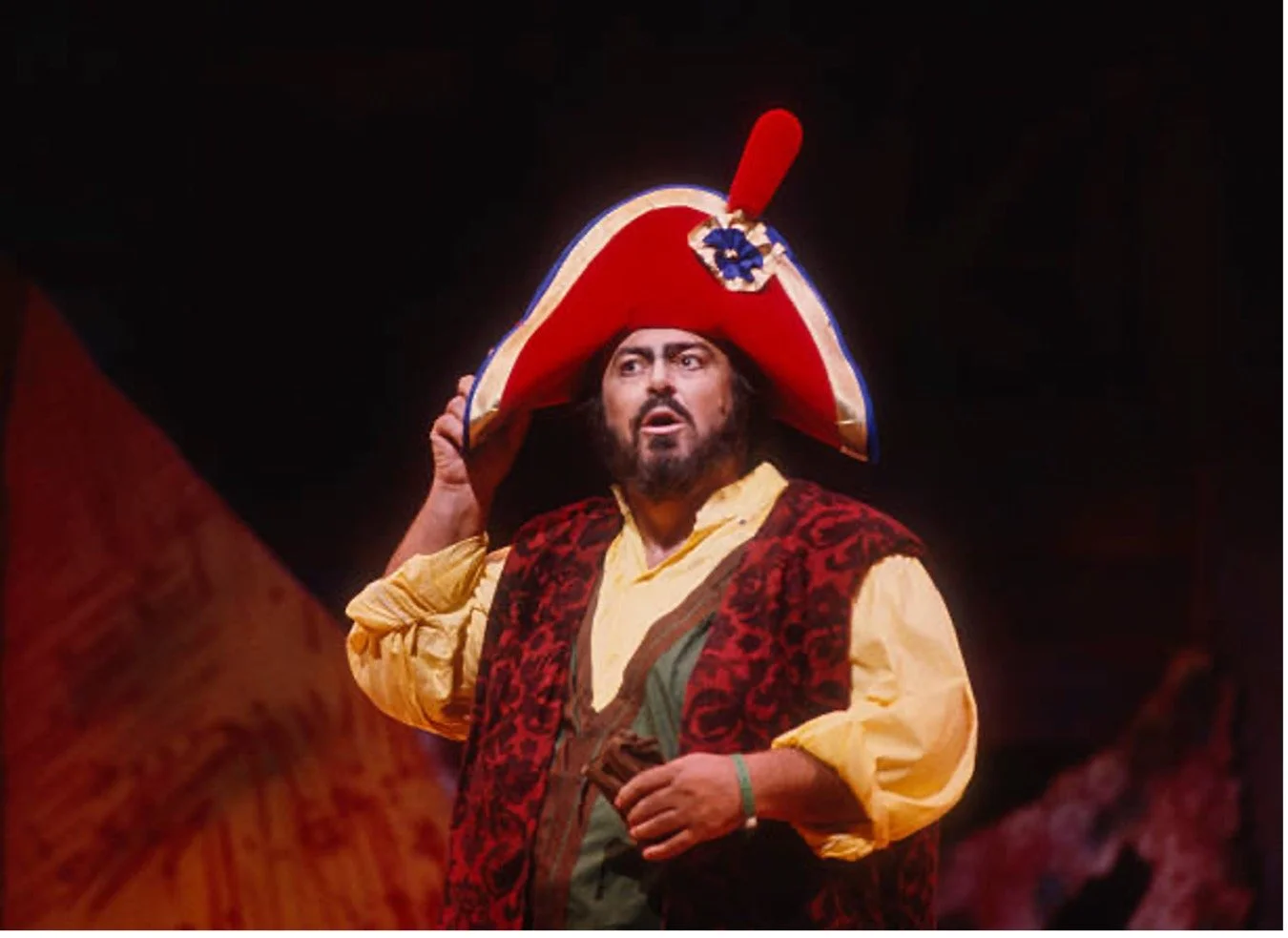
Luciano Pavarotti in L’Elisir D’Amore
Opera companies are utilizing technology to increase the appreciation of its variety of languages. Subtitles make performances in any language accessible to the audience. Performances are live-streamed in high definition to movie theaters and on personal devices. Modern productions frequently use digital projections, complex lighting, and updated settings (e.g., 21st-century clothing) to keep classic works relevant.
Newer operas deal with modern issues. Recent works address topics like human trafficking (e.g., Angel's Bone) and the dark side of the internet (Two Boys). Directors have updated older works, changing character genders or removing outdated language. Works composed by women and people of color are increasing in frequency. New initiatives aim to reflect the experiences of diverse individuals on stage, helping new audiences see themselves in the performances.
The love of opera by two Supreme Court Justices, Anton Scalia and Ruth Bader Ginsburg, enhanced their warm friendship despite their profoundly different interpretation of the Constitution and its application in the late 20th and early 21st Centuries. Derrick Wang, the composer-librettist, moved by their friendship and opposing views, wrote a one-act opera, Scalia/Ginsberg. In this opera, Scalia is trapped in a cosmic room as punishment for his sharp dissenting opinions. Ginsburg breaks in to help him pass legal tests that would allow his escape. All the lines sung by both protagonists are from their legal opinions or their exact public statements. It was first previewed in the Supreme Court with both Justices in attendance, and a public debut of the opera was held at the Castleton Festival in Virginia in 2015.
Ginsburg’s love of opera led to her being given a part in The Daughter of the Regiment (La fille du régiment), performed by the Washington, D.C. Opera. She portrayed the Duchess of Krakenthorp, a comedic, non-singing role. The other accommodation was that she spoke her part in English, whereas the rest of the opera was sung in French.
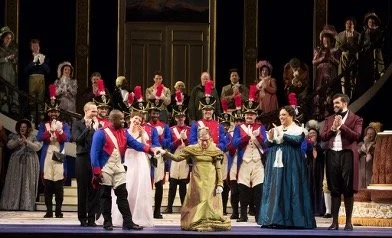
Justice Ginsburg taking her bow at the conclusion of La fille du régiment in the Kennedy Center for the Performing Arts in Washington, DC, in 2016.
Because of her close friendship with Opera Director Francesca Zambello, who during the summer directed the Glimmerglass Opera near Cooperstown, New York, Justice Ginsburg hosted an annual lecture series there, where she commented on the aspects of crime, justice, and law in various operas. Artists in residence performed scenes with relevant issues and, thereafter, Ginsburg applied her keen legal analysis, often witty, to the features of the legal issues portrayed. Ginsburg did this over nine summers, attracting throngs to this annual event. (see also, Glimmerglass Opera, Cornell, the Notorious RBG and me)
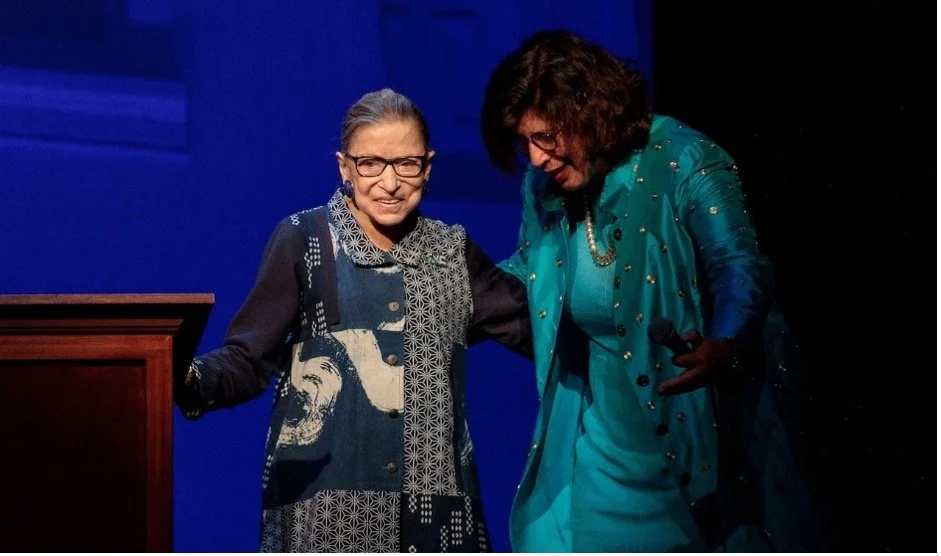
Justice Ginsburg and Francesca Zambello at The Glimmerglass Festival: The Opera and the Law Lecture.
The industry is experimenting with how opera exists in the 21st-century economy as traditional revenue approaches are struggling; The Metropolitan Opera, for instance, faces deficits as it tests ways to subsidize performance costs through digital and tiered-pricing approaches.