An Autobiographical Vignette: Dinner with Elizabeth and Robert Dole
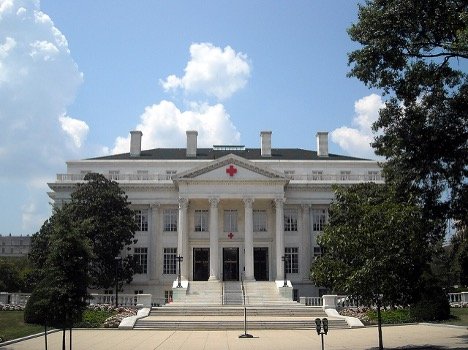
American Red Cross National Headquarters
First published July 16, 2026
I was among the first Americans to know that Operation Desert Sabre had begun on February 23, 1991 at 8:00 pm, Eastern Standard Time (4:00 am, February 24th, Arabian Standard Time). It was the Allied effort to free Kuwait from Saddam Hussein’s occupation with American leadership and assets. The backstory follows.
On a spring day in 1990, I received a call from Washington. I was at my desk in the Dean’s Suite at the University of Rochester Medical Center. The call was from an official at the American Red Cross headquarters in Washington, D.C., requesting that I join its Board of Governors. I had been involved with the American Red Cross in several capacities over the years. The caller, I am sure, was unaware of these prior associations. I had served on the Medical Advisory Committee of the Rochester, New York Red Cross Regional Blood Program and on the Board of Directors, American Red Cross Blood Services in the Rochester, New York Region. I had been a member the National American Red Cross Scientific Advisory Committee on Blood Program Research. From 1987 to 1995, I had served as the chairperson of the American National Red Cross Scientific Council. The latter was a visiting committee that reviewed and provided commentary on the scientific work being conducted at the Jerome H. Holland Laboratory for the Biomedical Sciences of the American Red Cross in Bethesda, Maryland. The Red Cross was an important organization, which benefitted our citizenry in many ways. I looked forward to this opportunity to enhance my service to this impactful agency.
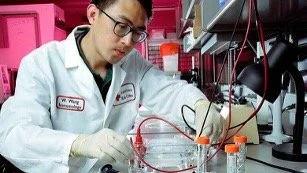
American Red Cross Jerome Holland Biomedical Research Laboratory
I was to join the subset of the Board that had expertise in transfusion medicine. It was an interesting task and an interesting Board. At that time, the Board had CEO’s of businesses around the U.S. and regional Red Cross officials from various parts of the U.S. It included, also, several government officials, including the Secretary of Defense (Dick Cheney) and the Joint Chief of Staff (Colin Powell) because of the Red Cross’s reach into support for the Armed Forces. It also included the Director of FEMA because of the important role of the Red Cross in supporting those affected by disasters. The Biomedical Services Committee of the Board had several non-Board members selected for their scientific and clinical expertise in immunology, blood transfusion, and the therapeutic use of blood products.
Elizabeth Dole had just finished her second stint as a Cabinet Secretary, initially as the first woman to serve as Secretary of Transportation from 1983-1987 under President Ronald Reagan and then as Secretary of Labor from 1989-1990 under George H.W. Bush. Dole was an experienced administrator and gracious person. In late 1990, she was appointed the President and Chief Executive Officer of the American Red Cross, the first woman to head the organization since its founder, Clara Barton (1821-1912). The Chair of the Board of Governors and Principal Officer of the American Red Cross was Norman R. (Norm) Augustine, the Chief Executive Officer of the Martin Marietta Corporation and, soon thereafter, of Lockheed Martin Corporation after a merger of Martin Marietta and Lockheed. Augustine was an embracing and accomplished leader.
In 1990, nine years had passed since the first cases of what was eventually designated the acquired immunodeficiency syndrome (AIDS) had been described in five members of the gay community of Los Angeles. The lead physician who made this observation, immunologist Michael Gottlieb at UCLA School of Medicine, received his M.D. and did his internal medicine residency at the University of Rochester Medical Center, where I had been one of his professorial instructors as both a medical student and an internal medicine resident. The diseases that led the five men to seek medical attention were rarely seen in immunocompetent individuals. They also had an associated low level of CD-4 T-lymphocytes in the blood, providing further strong evidence of an underlying immunodeficiency. CD-4 T-lymphocytes are critically important to maintaining a normal immune response to pathogens. They called the syndrome Gay-Related Immune Deficiency. As more cases accrued and awareness grew that it was possible to transmit the virus to individuals who were not gay by, for example, blood transfusion from an asymptomatic donor carrying the virus, the name was changed to acquired immunodeficiency syndrome or AIDS.
In 1983, French scientists identified the human immunodeficiency virus, HIV, the cause of AIDS. This discovery led to critical advances in dealing with the virus’s entry into the blood supply and in developing procedures to assure the safety of the transfusion of blood and blood products as well as therapeutic approaches. Implementation of standard testing of blood donors for HIV began in 1985. The identification of the causative virus also led to the development of therapy and preventive measures. There were still challenges facing the Biomedical Services Division of the Red Cross, challenges the Board and its Biomedical Services Committee had to address.
At each Board meeting, the Board members would dine together one evening and, under Elizabeth Dole’s leadership, often in a special venue: for example, the historical rooms of the Department of State. On this occasion, February 23rd, 1991, we were dining at the United States Botanic Garden, a venue that requires the sponsorship of the U.S. Congress. I was sitting at a table for four with another Board member, Elizabeth Dole, and her husband, Senator Robert (Bob) Dole. Dole was the Senate Minority Leader at that time. As we were dining, two members of the Washington, D.C., police force appeared and asked Senator Dole to accompany them to their car. He returned to dinner after a short period away. He shared with us that he had taken a call from President George H.W. Bush informing him that he had just ordered American military ground forces into action to remove Saddam Hussein from Kuwait. It was around 7:00 pm in Washington, D.C., and 3:00 am in Iraq. Operation Desert Sabre would start in one hour.
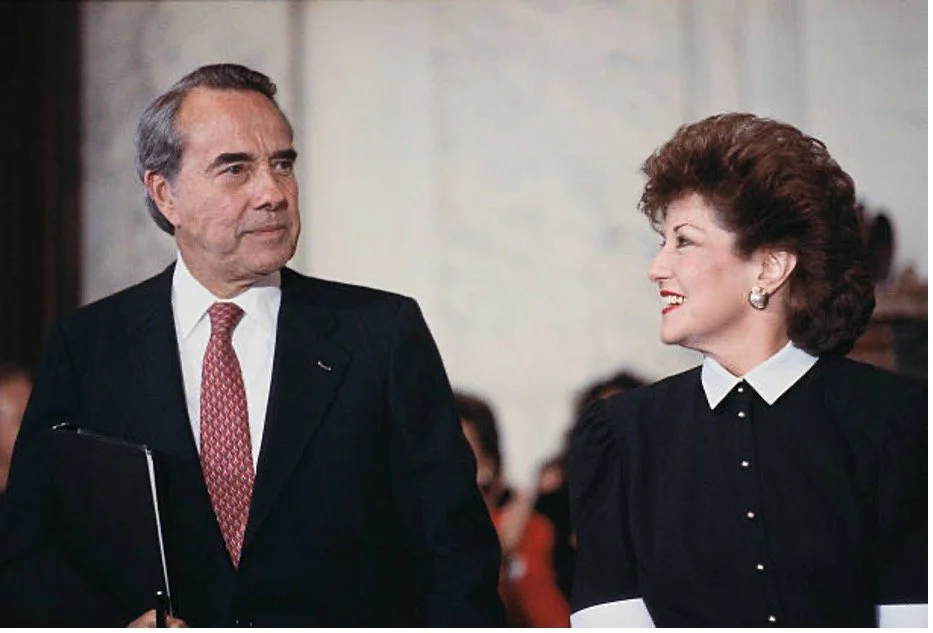
Robert and Elizabeth Dole
The opening of the conflict, Operation Desert Storm, was the extensive aerial bombardment of Iraqi forces and command networks in Iraq and Kuwait starting on January 24, 3:00 am Arabian Standard Time. On the evening of February 23, 1991, at 8:00 pm Eastern Standard Time in Washington, D.C., Allied Forces, under the leadership of General Norman Schwarzkopf, initiated their ground offensive to expel Iraqi forces, under the command of Saddam Hussein, and liberate Kuwait. This operation was accomplished in four days. Senator Dole shared with those of us at our dinner table the news that the ground offensive to liberate Iraq was to begin that evening, about an hour after he received the call from the President.
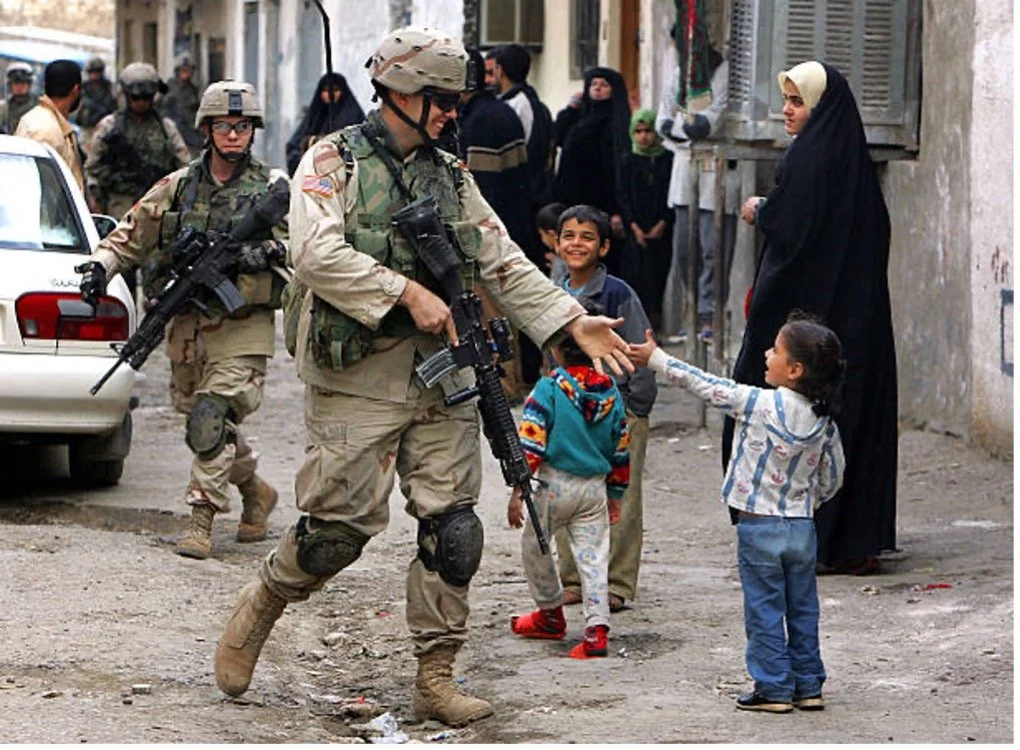
Operation Desert Sabre. Allied Forces liberating Kuwait